Thursday, 13 September 2018

Uber brand gets make over and a new marketing chief


via taxi-point https://ift.tt/2xco61e
Uber have announced a total rebrand following the arrival of Rebecca Messina who will join the company’s executive leadership team as global Chief Marketing Officer. As Uber’s first-ever CMO, Rebecca will aim to bring together Uber’s marketing teams around the world, building a global marketing organisation that can support the company’s growth going forward.
One of her first changes sees the major step away from the corporate cold looking tech logo to a more warm and welcoming font. “Rebecca brings deep experience in building global brands, and she’ll be a terrific leader for Uber’s marketing teams around the world,” said Barney Harford, Uber’s Chief Operating Officer. “We’re excited to learn from her as we work to make Uber one of the world’s most valuable brands, supported by cutting-edge marketing systems.”“Joining Uber is a once in a lifetime opportunity and a true privilege. My focus has always been on three things: people, growth and brands,” said Messina. “Uber checks all three boxes: a rapidly growing global business, with the opportunity to build an iconic brand alongside a team that’s committed to transforming the future of mobility. I couldn’t be more excited about what lies ahead.”
September 13, 2018 at 08:24AM https://ift.tt/2ufVjKI THESE POSTS ARE NOT OUR ENDORSEMENT

Wednesday, 12 September 2018

Coram Fields playground reopens thanks to LTCFC grant


via taxi-point https://ift.tt/2xa1EWn
Coram’s Fields announced the official reopening of their nursery playground, after receiving a grant from the London Taxi Drivers’ Charity for Children (LTCFC), formerly known as the LTFUC, for the sum of £18,902.
The generous grant has paid for the resurfacing of the outdoor nursery playground with fun, interactive designs painted on the surface and for the purchase of new, mobile educational play equipment, which supports the development of children attending the nursery.
Coram’s Fields, situated in Camden, serves as a safe place for all children to have fun and play and is one of London’s most unique and beloved children’s charities.In the economic climate, with reduced funding available, the nursery has been able to cover its running costs, but without additional fundraised income, it could not invest in the nursery’s facilities and resources to maintain the space.On the day, the Mayor of Camden, Councillor Jenny Headlam-Wells unveiled the plaque in memory of the late William ‘Bill’ Tyzack BEM, former LTCFC Life President.
September 12, 2018 at 04:42PM https://ift.tt/2ufVjKI THESE POSTS ARE NOT OUR ENDORSEMENT

Ride-sharing, Black Taxis and cycles are the future of transport believes Uber's new European Director


via taxi-point https://ift.tt/2x9v4nE
Uber's new European Director Jamie Heywood gave a speech on Wednesday 12 at the London Infrastructure Summit where he admitted the controversial ride-sharing company have had a bumpy journey over the last few years. Heywood told his audience that the firm believes that a combination of Uber, Black Taxis and an infrastructure that better supports cycling, there will one day be no need for individuals to own their own cars. Heywood, who believes cooperation is the way forward for his new employers, admitted that its "not something Uber has always been good at in the past" but says the company is opening up "a new chapter". Here's Heywood's speech in full:
We're really proud to be supporting this year's event and discussing some vital issues for the long-term future of our city, especially now that half the population of the capital regularly use Uber to help them get around. And I'm delighted to be on stage for my first public event since joining the business just three months ago - though as ever with a company like Uber a LOT happens in a short space of time! It's clearly been a bumpy road for Uber over the last few years. But we see our licence renewal this summer - and the big set of changes we have made over the last year - as a new chapter for Uber in London.
Of course there is still more work to do, but under our new leadership we're bringing in: Improvements for passengers - from new safety features to 24/7 telephone support;
Improvements for drivers - including for the first time sickness, injury, maternity and paternity protections;
And a new more cooperative approach to how we work with regulators and cities. Our shared vision with TfL Indeed we share much of the vision of Transport for London and the Mayor for a city where people walk and cycle more, drive personal cars less, face less congestion, and breathe cleaner air. Of course this will require continued improvements in public transport, but it also needs the participation and investment of all of us here today. And crucially, if we're really serious about keeping cities moving, the ambition for all of us should be the end of individual car ownership so that every vehicle on the road carries multiple people multiple times a day. Because how can it make sense that the most expensive asset that many of us will ever own - aside from our homes -is a big hunk of metal that sits idle 95 per cent of the time?
How can it make sense that an extraordinary 16% of land in central London is dedicated to parking? And how can it make sense that around six in ten car journeys in the capital have just one person in the vehicle? That's why I believe Uber's real competition is private car ownership. You'll hear more on this from my colleague, Fred Jones, later this morning but... We believe that with great public transport, infrastructure that better supports cycling, apps like Uber filling in the gaps - especially in the outer parts of cities - and yes, black cabs too - there will one day be no need for individuals to own their own car. In fact, the emerging signs of this new future are clear:
In the past 20 years, the number of teenagers holding a driving licence in the UK has fallen by 40%;
More than four in ten Londoners told YouGov that alternatives like Uber can be preferable to owning a car;
And property developers are now promising residents credits for services like Uber if they give up a parking space. What Uber is doing to make it a reality But there is a long way to go. We want our app to become a one-stop shop for every transport option. So, if you need to get from A to B, you'll soon be able to tap our app and see a whole range of choices. Not just cars, but bicycles, public transport and - in some countries - electric scooters too. And if the quickest and cheapest way to get somewhere is by taking a bus or a bike, we'll tell you.
Of course this may cost Uber in the short-term, but we believe it's essential for the long-term success of not just our business but our cities and communities too. And we believe we can be a part of the solution to some of the huge challenges London and other big cities face - not least air quality and congestion. This means we have to work with, not against, others. That's not something Uber has always been good at in the past. But under our new leadership, we are committed to doing things differently: Helping urban planners by opening up our rich journey data for the public good - and you can see our new tool Uber Movement in action in the exhibition stand today;
Innovating with transport operators like Virgin Trains - so that passengers can get seamless door-to-door travel across different transportation modes with just one ticket;
Investing in new ways for people to get around their cities - from shared bikes to electric scooters;
And working with the industry to encourage the speedy adoption of electric vehicles - with our bold ambition for Uber to be all-electric in London by 2025.
What the future could look like; Imagine a world where all the vehicles on the road are shared and electric. There would be less air pollution, less congestion, less space wasted on parking and more land freed up for housing and green spaces.
But to get there we need our infrastructure to catch up. That means: A massive expansion of rapid chargers for electric vehicles;
More dedicated spaces for bike-sharing; And bolder options like designated car-free streets.
And not just physical infrastructure - digital too. In TfL, this city is lucky to have a transport authority that has pioneered digital innovation - from contactless payments to app integrations to wifi deep underground - and it's vital that as a city we adopt that digital-first mindset as we gear up for a cashless, connected future offering tech-enabled transport for all.
Conclusion The people in this room - be it business, government, academics - are never going to agree on everything. But when it comes to the future of our cities, I take heart from the fact that we have so many common goals - be it around air quality, congestion, or accessibility. Ultimately, it's about making the places we live more liveable. These are big issues, but we believe that with the public and private sectors working in partnership
- and focused on long-term, sustainable success
- we can ensure our cities move more freely, enjoy cleaner air and are accessible to all. Thank you.
September 12, 2018 at 02:12PM https://ift.tt/2ufVjKI Michael Murphy THESE POSTS ARE NOT OUR ENDORSEMENT

Picture of patchy mobile voice and data coverage across UK road network


via taxi-point https://ift.tt/2MtmhTi
There are still more than five and a half thousand miles of road in Britain where drivers would find it impossible to call for help in case of a crash or breakdown because there is no mobile phone voice coverage from any network provider.The stretches of road – measuring 5,540 in total – represent 2% of the length of Britain’s overall road network – which is 245,705 miles long.A further 44,368 miles of road (18%) have only partial voice coverage meaning there are many areas where some but not all phones will receive a signal depending on the service provider they rely on.Those local authority areas with the most miles of road with no voice coverage are:
Highland (910 miles of road with no voice coverage)Powys (411 miles)Argyll & Bute (388 miles)Cumbria (296 miles)Dumfries & Galloway (266 miles)North Yorkshire (219 miles)Gwynedd (213 miles)Na h-Eileanan Siar (207 miles)Scottish Borders (192 miles)Devon (190 miles)
In all, 90 local authority areas will have one or more stretches of road where there is no voice signal available.There are currently four mobile network providers: EE, O2, Vodafone and Three. These networks also provide services for third parties. For example, Virgin Mobile, Asda Mobile and BT Mobile use the EE network.If a mobile phone user is in a location where his/her mobile phone network provides no coverage but another network does then an emergency call can still be made from that phone.If there is no network coverage from any of the four providers then not even an emergency call can be made.When it comes to data – at least 3G and possibly 4G – access, there are 5,452 miles of road with no coverage at all and a further 66,619 miles with only partial coverage meaning those taxi and private hire drivers relying on apps for work and directions could be struggling in certain areas.As for those looking for the fastest access to the internet and data services, 13,948 miles of the road network have no 4G coverage at all, while 107,187 miles have only partial coverage.
According to Ofcom 94% of UK adults own/use a mobile phone and 76% of adults have a smartphone.Steve Gooding, director of the RAC Foundation, said:“The good news is that mobile coverage has improved a great deal across our road network. On our motorways, which carry around a fifth of all traffic, every mile should now have voice and basic data coverage plus a 4G signal for all but a couple of miles.“As rapidly as the technology has advanced, so too have our expectations of enjoying uninterrupted connectivity.“Hopes are high that autonomous and connected vehicles will make our roads safer and help cut congestion, but that is dependent on those vehicles being able to communicate with each other and the infrastructure around them. This analysis shows that there is still work to be done to make constant and comprehensive coverage a reality.”
September 12, 2018 at 10:44AM https://ift.tt/2ufVjKI THESE POSTS ARE NOT OUR ENDORSEMENT

London Assembly supports a continued private hire exemption on Congestion Charge


via taxi-point https://ift.tt/2x3e0Az
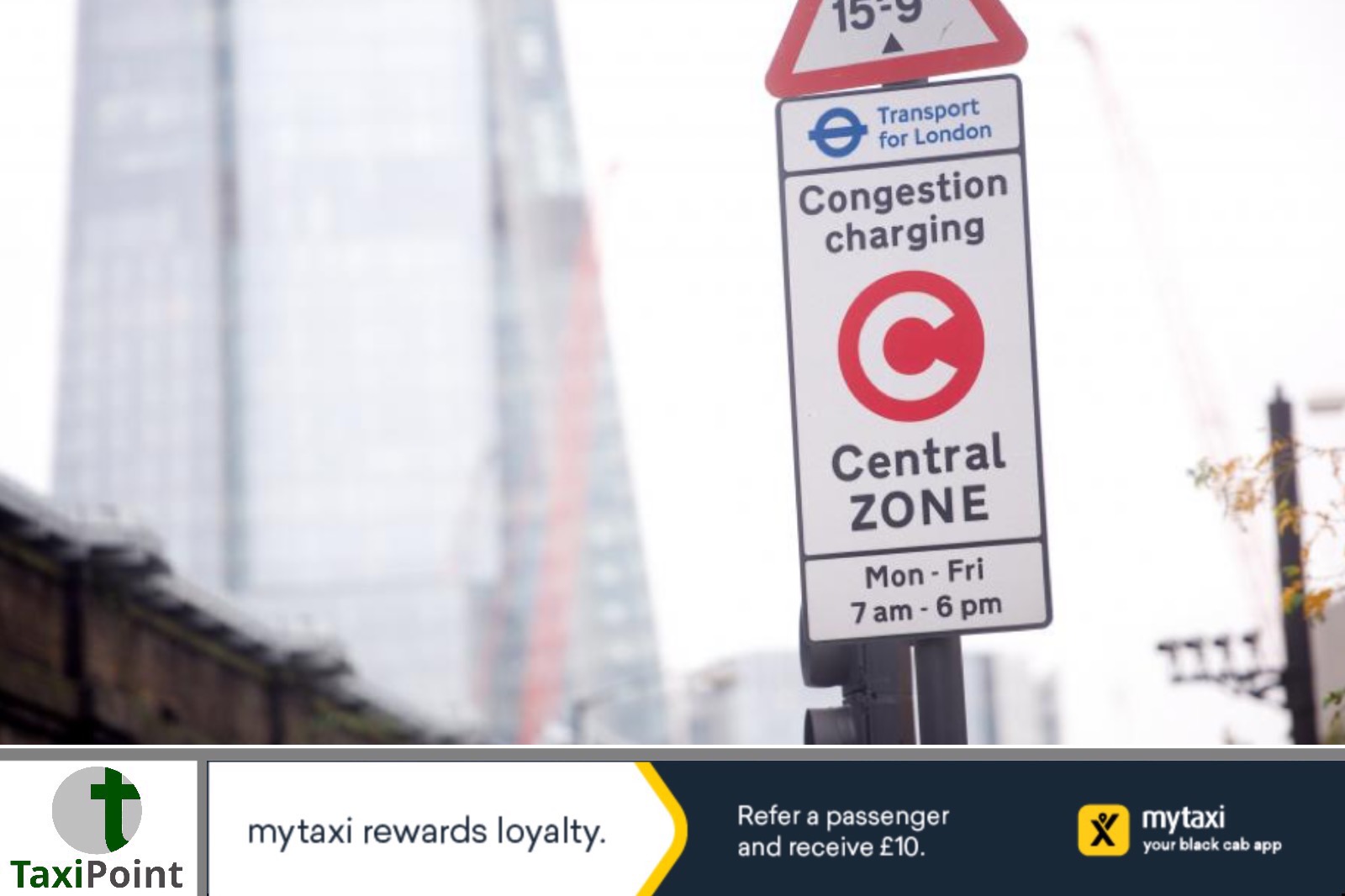
Mayor of London, Sadiq Khan, has drawn-up plans to remove the congestion charge exemption for private hire vehicles - but the London Assembly is calling on the mayor to rethink his plans.Private hire vehicles are currently exempted from paying the £11.50 daily charge.The TfL proposal to remove the congestion charge exemption for Private Hire Vehicles, including Uber and minicabs, would be implemented from April 2019. The change would not apply to wheelchair accessible PHVs.TfL said that the number of vehicles entering the zone each day has decreased by around 30% since the congestion charge was introduced in 2003. However, in the meantime, the number of PHVs entering the zone has increased from 4,000 a day to more than 18,000. This isn’t surprising, given that since the arrival of Uber, the number of registered London minicab drivers has risen by 66%. Over the past two years, congestion has increased by 10%.However, the London Assembly earlier this week voted to support the congestion charge exemption for private hire vehicles.Gareth Bacon AM, who proposed the motion said:“This policy would fail to achieve its primary objective – it would not significantly reduce congestion. The Mayor’s own figures show that the number of PHVs in the Congestion Charge Zone would fall by only 600 a day or 1 percent.“When businesses are hammered prices go up and the data shows that operators would have to increase their charges by up to 16 percent – hitting Londoners’ pockets.“Unfortunately, this policy is just an excuse for the Mayor to raise some of the money he needs to plug the nearly £1 billion black hole in the transport budget. Talk of congestion and pollution is just a smokescreen.”
September 12, 2018 at 07:17AM https://ift.tt/2ufVjKI THESE POSTS ARE NOT OUR ENDORSEMENT

Tuesday, 11 September 2018

Is London closed for business?


via taxi-point https://ift.tt/2x82Pp8
With the maniacal obsession afforded by almost every single council, as well as the GLA in seemingly attempting to bring London to a grinding halt, the question has to be asked, who does it serve?Between the abomination to just about every motorist, that is the cycle superhighway, to the latest wheeze from Hackney and Islington councils in shutting down 9 minor roads to non-electric vehicles, the amount of damage being done to London cannot be over-stated.Roads are becoming more and more polluted, leaving drivers stranded in non-moving traffic, slowly being poisoned by stinking fumes. The diesel and petrol driven vehicle is being blamed for this occurance, however the real villain of the piece are both the local authorities and the GLA themselves, they are suffocating London through constriction, so as to a Utopian agenda.Moving vehicles are less polluting vehicles, that is a scientific and mechanical fact which cannot be debunked.....static traffic is a killer, yet this just does not seem to compute with some councils because it is an inconvenient truth. We have the Congestion Charge in London, along with the Toxicity Charge, and ironically enough, swinging back to the lunacy which is the 9 streets in Shoreditch, you still cant use those roads, despite paying in two seperate ways for the privilege. You couldnt make it up.It has to be said that the move to vehicles with an alternative drive train is a positive and should be encouraged, however this takes time, and poorer families are being heavily penalised.At the moment it is all stick and no carrot, and worryingly this could end up with thw general public exercising a display of defiance, saying "this far....and no further"......and they would be fully justified in doing that.After speaking to dozens of members of the public, the one common denominator is that there is almost no support for any of the current schemes.....and no confidence in the local authorities either. All the puvlic are seeing is co.plete gridlock, artificially engineered.Obviously a general conversation is no basis for a survey, but it is also telling that these individuals are so disenfranchised by various local authorities that they cannot be bothered filling out survey after survey for any given council, due to the the fact that they have zero confidence in any given council actually listening, unless of course it suits a councils agenda.We have already had TfL proclaim that some of the cycle superhighways were a folly, we've had a tribunal dictate that Camden Council should alter the fiasco surrounding the cycle lanes around Tavistock Square, we've had Westminster Council "coalbox" TfLs aim of pedestrianising Oxford Street.....and in the meantime Londoners suffer.Suffocating London isn't, and never was the answer, right now we have notging more than a triumph of ego over common sense.The solution isn't rocket science....keep London moving by making sure the current volume of traffic can flow, whilst working to an edict of encouraging people to switch to alternative vehicles without continually finamcially penalising them.The choice is simple, open up the capitals road...or watch the capitals economy slowly collapse as businesses move away from London.
September 11, 2018 at 07:03PM https://ift.tt/2ufVjKI THESE POSTS ARE NOT OUR ENDORSEMENT

Workers in the gig-economy will get sick pay and other rights under Labour says McDonnell


via taxi-point https://ift.tt/2Mjcf6V
In a keynote address to the TUC Congress today, Labour Shadow Chancellor John McDonnell MP will say that gig economy workers will be given the same rights as full employees under a Labour Government, a move that would benefit millions of workers in the gig economy and other insecure work who are not currently entitled to sick pay, parental leave, or protections against unfair dismissal.The Shadow Chancellor will insist that only a Labour Government had the understanding and commitment needed to deal with the challenges of the modern labour market.He will criticise the Government’s Taylor Report for ignoring trade unions, saying “even if the Government adopt every positive recommendation in Taylor, it will not be enough” because “the most effective way to improve the lives of working people is through trade unions and collective action.”In his speech to the TUC, John McDonnell MP will say:“The answers to the gig economy won’t be found in the pages of the Government’s Taylor Report or in the months of consultation that have followed.“Because the report’s starting point is that flexibility must come at the price of insecurity. This is wrong.“Just because you don’t work regular hours doesn’t mean you can afford not to work when you are sick.“Just because you work several jobs doesn’t mean you can afford to lose one of them without warning.“Just because you value the freedom of independence or the convenience of flexibility doesn’t mean you have to forgo basic rights.“Our manifesto, For the Many not the Few, published a full nine months before Taylor, contains a simple set of policies that would put a complete stop to exploitation in the gig economy.“First, shift the burden of proof, so that the law treats you as a worker unless the employer can prove otherwise.“Second, extend full rights to all workers including so-called “limb b” workers entitling everyone in insecure work to sick pay, maternity rights, and the right against unfair dismissal from day one of their employment.“Third, properly resource HMRC and fine employers who break the rules so that people get the rights they are entitled to.“It’s not rocket science.“When employers use legal loopholes and weak enforcement to duck their responsibilities close those legal loopholes and strengthen enforcement.“When technology creates new employment relations extend regulation to keep pace.“And when the balance of power shifts so dramatically away from workers as it has done today it’s time for us to tip it back.“Taken with our commitments to repeal anti-trade union legislation and strengthen trade union rights, to give workers a seat at the Cabinet table by establishing a Ministry of Labour and to roll out sectoral collective bargaining across the economy what we are proposing to amounts to the biggest extension of individual and collective rights our country has ever seen, a plan that will irreversibly transform our workplaces and working lives.“And it has trade unions right at its heart.“Because even if the Government adopt every positive recommendation in Taylor, it will not be enough. Taylor ignored a crucial lesson of history – that the most effective way to improve the lives of working people is through trade unions and collective action.“We won’t forget, because it’s the principle our movement was founded on.”
September 11, 2018 at 11:25AM https://ift.tt/2ufVjKI THESE POSTS ARE NOT OUR ENDORSEMENT

LEVC announces electric van trials to begin next year


via taxi-point https://ift.tt/2MjxXrq
LEVC has announced that it is due to start trials with potential customers of its new electric van in London in the second half of 2019.The business is currently in discussion with a number of major public-sector fleets about joining the trials of prototype vehicles. This includes the Metropolitan Police Service and the London Fire Brigade – both of whom have ambitious programmes to clean up their vehicle fleets, with a target for all new vans being zero emission capable from 2025.Earlier this year LEVC, who currently manufactures the world’s most advanced electric taxi, announced it would be entering the van market with a zero-emission capable product. The product combines 70 years of knowledge of designing vehicles for city streets with a proven electric vehicle powertrain.Like the taxi, the van will combine a fully electric powertrain with an economical petrol range-extender, This approach means cleaner vehicles that are able to go the distance but also lower running costs. LEVC expect that the vehicle – for its size – will deliver a competitive total cost of ownership.LEVC have previously announced that this product is not intended for “last-mile delivery” and will instead focus on fleets where vehicles undertake demanding duty cycles – for example, travel over 100 miles a day. This is a segment currently dominated by 1 tonne medium sized diesel vans.Other key features of the van will include class leading safety systems as standard. This means some of the latest semi-autonomous safety systems from some of the world’s leading technology providers – as well as meeting the world’s highest crash safety standards. The vehicle is also required to meet LEVC’s million-mile TaxiDur test – one the most stringent vehicle durability testing regimes.
September 11, 2018 at 11:03AM https://ift.tt/2ufVjKI THESE POSTS ARE NOT OUR ENDORSEMENT

Uber rival Didi Chuxing announce losses of almost £445 million in the first half of this year


via taxi-point https://ift.tt/2N4Owg3
Chinese super-firm Didi Chuxing, a major global rival of ride-sharing giants Uber, announced losses of around £445 million in the first half of this year. In December Didi were valued at a staggering $56 billion, but with huge subsidiaries forked out to drivers and passengers, the SoftBank backed firm averages a "razor thin" margin of 1.6 percent of every ride, Reuters has said. In comparison, main rival Uber Technologies Inc. keeps on average 23 percent of each transaction, putting them in a much better financial position to push for an IPO during their target year of 2019. Didi has also faced a major public backlash after two women were killed by two of their drivers within a matter of months tarnishing their image. Regardless of any heavy financial losses, major firms still stockpiled Didi with some serious monetary investment last year, with a whopping $12 billion pumped into the company by the likes of Apple and Japan's SoftBank. The Didi Vs Uber battle will no doubt run on for years to come, but with such stiff competition, will either of the ride-sharing juggernauts ever make a healthy profit to make all their efforts and controversy worth it?
September 11, 2018 at 09:54AM https://ift.tt/2ufVjKI THESE POSTS ARE NOT OUR ENDORSEMENT

CCTV in taxis - What is the law on continuous recording?


via taxi-point https://ift.tt/2QiFXfv
CCTV systems installed in taxis and private hire vehicles is becoming an increasingly common feature. An increasing amount of councils are either allowing CCTV cameras to be installed or making it a mandatory requirement as a way to combat crime, to protect drivers and vulnerable passengers.
The Information Commissioner (ICO) recently reported that they have seen an increase in cases of CCTV in taxis and more particularly, taxi CCTV systems that continuously record.
Continuous recording CCTV systems are systems that start recording whenever a vehicle is running and continues to record until the vehicle engine is switched off.
When a taxi or private hire vehicle is used privately (i.e. not for hire or reward), the CCTV system continues to record.
Is continuous recording CCTV systems installed in taxis lawful?
As a starting point, capturing a person’s movements on camera is accepted as particularly intrusive and as such subject to strict data protection rules and human rights law. The legislation referred to specifies that information captured and processed via CCTV must, among other things, be necessary and proportionate.
When a taxi or private hire driver is working, clearly the use of CCTV would be proportionate and arguably necessary in light of its purpose; to combat crime, to protect drivers and vulnerable passengers.
However, when a taxi or private hire driver is off duty, the continued use of CCTV recording is likely to be unlawful, unfair and excessive in light of data protection and human rights legislation.
The ICO’s view is that in most instances, continuous recording CCTV systems in taxis and private hire vehicles are unlawful.
Licensed holders need to take steps to protect themselves from complaints of excessive use of CCTV systems in their licensed vehicles. The use of CCTV in taxis must be limited to instances where it is necessary and proportionate. As such, CCTV should only be recording when you are working and switched off then you are off duty.
Additionally, cases where CCTV systems in taxis are a mandatory requirement, the ICO’s view is that the relevant data controller is the council not the individual vehicle licence holder. In other words, in most circumstances where a council instructs CCTV systems to be installed, the instructing council will be responsible for controlling and processing the data even though it is being recorded in a taxi or private hire vehicle.
Taxi Defence Barristers act for taxi and private hire licence holders who are facing difficulties with their licences – Licence revocations, refusals, suspension and all criminal matters.
September 11, 2018 at 07:31AM https://ift.tt/2ufVjKI Stephen McCaffrey THESE POSTS ARE NOT OUR ENDORSEMENT

Monday, 10 September 2018

Nicklas Bendtner charged after cabbies jaw is broken


via taxi-point https://ift.tt/2NwvMW3
Former Arsenal striker, Nicklas Bendtner has been charged by police after a cab drivers jaw was broken, according to a report in Reuters. The assault happened in Copenhagen and left the taxi driver needing surgery. Bendtner, who now plays for Norwegian side, Rosenberg, was named as the attacker by the communications manager of DanTaxi. The incident took place at around 2.40 am local time on Sunday. Bendtner was omitted from Denmarks squad due to play Wales in their nations league match Bendtner played 171 games for Arsenal, scoring 45 goals and is one of Denmarks most capped players, making 81 appearances and scoring 30 goals
September 10, 2018 at 11:47AM https://ift.tt/2ufVjKI Steve Kenton THESE POSTS ARE NOT OUR ENDORSEMENT

Metrocab “Remains on course” despite debt worries


via taxi-point https://ift.tt/2QjkG5y
The new electric Metrocab is still on course to enter the taxi market despite several setbacks, the company has told TAXI magazine.
Frazer Nash was ordered to be “wound up” by a High Court judge last month over more than £1.5m of unpaid debts.
But a spokesman for the company said its legal team was thrashing out a response which he hoped would resolve the issue.
He said that greater setbacks had been caused by LEVC’s claims of copyright infringement, which Frazer Nash had to fight in court.
The Metrocab manufacturer won the case and the subsequent appeals, which caused significant delays to the introduction of the vehicle to the taxi market.
The Metrocab electric vehicle, was hoped to be manufactured in Coventry, and if built will help improve air quality by tackling emissions of diesel fumes, allowing cities like London to meet international air quality standards.
The Metrocab became London’s first licensed zero-emissions capable taxi in 2014 and took part in a two-year Trial in London, covering hundreds of thousands of miles with 75% zero-emissions operation, substantially enhancing air quality, reducing emissions, and delivering significant fuel savings to drivers.
The Metrocab is fully ready for the introduction of London’s Ultra-Low Emissions Zone and in 2014 introduced a host of new features never before seen on a London taxi, including all-LED lighting; the London taxi market’s first panoramic glass roof for the passengers; USB charging; and zero-emissions capable operation.
September 10, 2018 at 10:58AM https://ift.tt/2ufVjKI LTDA THESE POSTS ARE NOT OUR ENDORSEMENT

Bristol based air-taxi aims for the skies within the next four years


via taxi-point https://ift.tt/2N5ekZG
Bristol-based start-up Vertical Aerospace, which was founded in 2016, has taken to the skies to become the UK's first electric vertical take-off and landing aircraft, with hopes of launching an 'air taxi' service within the next four years. The aircraft which has four propellers at the front and back aiding it's ability to take-off and land vertically, will be able to travel between "exact locations" without having to land at designated aircraft landing spots. Test flights took place in Kemble, Gloucestershire, after the company obtained permission from the Civil Aviation Authority to operate the prototype. Vertical Aerospace said they hope to launch an intercity air taxi service by 2022.
The race for the skies has become extremely competitive with a number of different companies working on their own "flying taxi" projects including ride-sharing giants Uber, British luxury automobile kingpins Rolls Royce and German based start-up Lilium, who made the world's first electric vertical take-off and landing aircraft in 2017. According to a report in the Telegraph, the Bristol-based start-up will focus on specific intercity routes such as journeys from Bristol to London, or Sheffield to Liverpool.
September 10, 2018 at 10:50AM https://ift.tt/2ufVjKI Michael Murphy THESE POSTS ARE NOT OUR ENDORSEMENT

Sunday, 9 September 2018

Leeds Taxi and Private Hire licensing manager wants to see more action to tackle Uber cross border issues


via taxi-point https://ift.tt/2Mfuhad
Leeds City Council's taxi and private hire licensing manager Andrew White highlighted his concerns this week over the amount of out-of-town licensed Uber drivers that are operating in the city. In a meeting organised to discuss the proposed clean air charging zone in relation to the taxi industry, White could not pass up the opportunity to talk Uber. Mr White stressed that the lack of legislation surrounding where a driver must obtain a licence and where they are able to pick up work as being a "major source of frustration" for the Leeds trade. The ability to obtain a licence in London and work on the Uber app in Leeds was closed earlier this year, but it has not stopped the influx of drivers who have been granted a licence in other parts of Yorkshire flooding the streets of Leeds looking for work. White believes that if you have the Uber app and want to e-hail one of their drivers while you're in Leeds, then you should only see the Leeds-licensed drivers that are available on the app.
As reported in the LeedsLive, White said the whole situation has become a major source of frustration for the local trade who work to a high standard and said that some of the out-of-town drivers are seen not to be working to those same high standards. Mr White believes conditions within the trade need to be updated to keep up with the new technology that has been introduced into the industry. White confirmed that Leeds City Council has lobbied central government on the issue.
September 09, 2018 at 06:07PM https://ift.tt/2ufVjKI Michael Murphy THESE POSTS ARE NOT OUR ENDORSEMENT

“On yer bike Uber!” says LTDA’s McNamara


via taxi-point https://ift.tt/2oR5akP
You may have heard that there’s a new PHV competitor on the market – Indian app Ola. It has already launched in South Wales, has gained an operating licence in Greater Manchester, and told the Evening Standard that it is in “constructive conversation” with Transport for London.
Ola is just one of a number of PHV firms trying to capitalise on Uber’s struggles both in London, and around the country as a whole. Ola has been making bold claims that it is the only app in the UK offering both PHVs and black cabs through “one consumer-friendly platform” and has pledged to “lead the industry” with its approach to driver working conditions and passenger safety. So, Ola is already telling fibs then! It doesn’t have any “black cabs” and won’t have - Uber tried that and after two years of trying, all sorts of incentives and giveaways only a handful of our trade sold their souls to join the dark side.
Ola’s ambition is to be nationwide by the end of 2018. Only time will tell whether it is really prepared to be a fit and proper operator, or whether it wants to be just another cowboy like Uber. While Ola’s moving into PHVs in London, Uber might be moving out. Its Chief Executive recently announced that he’s planning to ditch cars and switch focus to electric bikes and scooters in the next phase of its plans for domination. Uber’s planning to promote “alternative transport options to car use.” Ironic really, when they’re the biggest cause of increasing congestion in city centres. If Uber thinks that jumping on the back of the anti-car revolution will help its fortunes with TfL, it’s getting a little carried away. It will be directly challenging City Hall’s own Santander bikes, and joining the ranks of dockless bike schemes such as Mobike, which are already causing headaches for TfL. Uber’s also getting ahead of itself if it thinks it can pioneer electric scooters in London. We don’t have the regulation in place to allow electric scooters to be used on public roads in the UK; meaning it would quite simply be illegal to put them on our streets. At the end of the day, pushing its bike and scooter business in London is unlikely to give Uber the long-term security it is looking for. That’s not to say we won’t be pleased to see a few less Ubers around! While we’re on cycling, we are feeding into a new Government consultation on new laws which would introduce offences for cyclists causing death or serious inquiry. This has been a long time coming. Being out on the streets all day long, taxi drivers know better than anyone that dangerous cycling is becoming an increasing hazard to drivers and pedestrians alike. It’s great to finally see politicians take notice and work to better align penalties for offences for dangerous driving between car users and cyclists. With London roads becoming ever more congested, it’s up to all of us -cabbies, motorists, cyclists and pedestrians – to do our bit to make our streets safer.
September 09, 2018 at 10:05AM https://ift.tt/2ufVjKI Steve McNamara - LTDA THESE POSTS ARE NOT OUR ENDORSEMENT

“Londoners should not be denied the benefits that come with new technology” says Boff


via taxi-point https://ift.tt/2MXWgQV
As an integral part of modern life, the quality of our transport infrastructure should reflect the aspirations that we hold for the kinds of lives that we wish to lead. My 40 years’ experience in local government and my own career in the technology sector tells me that Londoners want, most of all, an transport system that embraces new technology and offers a wide range of competitive, affordable transport choices. If elected as the next Mayor of London, I will deliver a clear and comprehensive plan that will do exactly this, offering Londoners the reliable, affordable and high-quality transport system that they deserve, and which our city can be truly proud of. And I want to make one thing abundantly clear; the expansion and growth of new technology is something that we should all embrace. Nobody now would reject the mobile phone because it threatened the livelihoods of telephone operators. But, undoubtedly, with every new invention there are inevitably ‘grey areas’ and that is why new transport solutions are often piloted before they are rolled out for widespread public use. However, a general fear of new technology should not hold London and its transport system back in the twentieth century. This is especially so in areas where there are already clear, tangible benefits that can be gained for Londoners, their families and London’s millions of commuters. In my view, what London needs – and has needed for a while now – is a modern, innovative, and fully integrated transport system that keeps costs low while making passenger safety the number one priority across all transport services. This is what Londoners are going to get if I become Mayor in 2020. Each of us have our own particular transport preferences and this is especially relevant in an increasingly populated, commuter-dominated area such as central London and its neighbouring boroughs. Innovative, agile transport systems such as Uber and other digital taxi apps offer Londoners an unprecedented choice when it comes to travel options, and the enhanced level of freedom that comes with this should be cherished by all as a fundamental element of a modern transport system. This is why I strongly believe that Londoners should not be denied the benefits that come with these modern and highly sophisticated new options. But there is another side to this. Transport for London (TfL) needs to properly enforce its regulations on all vehicles and drivers that they are responsible for, now and in the future. This includes performing regular driver checks and doing better when it comes to dealing with feedback and formal complaints alike. This is because I want a fully integrated, transport system that is equally fair to black cab drivers and private hire vehicle drivers alike. Over the years, the London Black Cab has become an iconic symbol of London and is a treasured, reliable mode of transport for many Londoners. Irrespective of the Black Cab’s esteemed place in London’s transport hierarchy, our transport system should be governed by an underlying principle of fairness, so it creates a healthy, thriving economy and a competitive transport network which is therefore affordable for the everyday Londoner. So I will say this again: Londoners should not be denied the benefits that come with new technology, especially in those areas where they are already delivering a positive impact, such as in those parts of London’s suburbs, poorly served by Black Cabs. To support Black Cab drivers, I will offer an interest-free loan scheme to help them purchase modern zero-emission cabs. I will also invest in a rapid expansion of the EV charging network to support this broader modernisation of our transport system. These two initiatives will help deliver a modern, affordable transport system that creates more choices for Londoners about how they travel in and around London and keeps travel costs at a competitively low price. At the same time it will play a part in cutting pollution and improving air quality in London. Nevertheless, more must be done to enforce the current regulations covering Private Hire Vehicles so that Black Cab drivers get a fair deal and can make a decent living from their trade and we can restore public confidence in a licensing system that is designed to keep passengers safe. In order to ensure that adequate and fair regulations on all providers in the ride-hailing industry are enforced I will split the licensing function off from TfL into its own organisation, answerable to me, with a remit for never compromising on public safety and I will invite the London Assembly scrutinise its operation and give a voice to interested parties. My plans for London on transport, as much as in other policy area are ambitious, but not unachievable. I want to improve reliability of the tube by embracing driverless technology; I want to speed up buses and make them more reliable, but the debate over Black Cabs and Uber rather defines the direction our City will decide it wants to go. Sadiq Khan’s protectionism will gum up the system not improve services for everybody irrespective of whether they want to take a cab or book an uber.
September 09, 2018 at 06:31AM https://ift.tt/2ufVjKI Andrew Boff THESE POSTS ARE NOT OUR ENDORSEMENT

London's LEVC taxi drivers left unable to charge vehicles as non-cabbies park on taxi charging points.


via taxi-point https://ift.tt/2QhOU98
London's taxi industry have discovered that they are facing a problem when attempting to charge their electric taxi......the geneeal public.
It has emerged that members of the public as well as private hire vehicle drivers are ignoring road markings where electric vehicle chargers, specifically for the use of electric taxis are sited.
As a result of this cabbies are left unable to charge their vehicles. This problem could be exacerbated when the new Nissan Dynamo electric taxi becomes available as there is no petrol engine in the vehicle which will allow the battery to hold its charge.
There is serious concern from cabbies at the lack of enforcement surrounding this problem.
Whilst no offence is committed if a member of the public uses the charging point to charge a vehicle which isn't a taxi, an offence occurs if that vehicle is parked in a space which is designated for a taxi, therefore becoming a parking offence punishable with a fixed penalty notice.
With around 400 low emission taxis already on the road there are serious concerns at the number of charging points available to those taxis, especially with many drivers unable to have a home charging point.
Londons LEVC drivers have now called for an increase in the number of charging points as well as on-street enforcement to be stepped up to combat the problem.
As it stands at the moment, the best form of policong the situation seems to be taxi drivers seizing the initiative and videoing, as well as photographing offending vehicles, and then forwarding all evidence to TfL.
We will be approaching TfL for a comment surrounding this issue.
September 09, 2018 at 02:29AM https://ift.tt/2ufVjKI THESE POSTS ARE NOT OUR ENDORSEMENT

Saturday, 8 September 2018

Cabbies fear that Lisson Grove muggers could kill


via taxi-point https://ift.tt/2MY4Rmz
As the Lisson Grove muggers attack taxi drivers in the area with impunity, some cabbies have expressed fears that somebody will be killed.
A report in the Ham and High has highlighted that attacks seem to be increasing.
Some of the attacks have iincluded the muggers trying to force drivers to stop in the middle of the road, as well as hailing a taxi and then convincing the driver that a disabled person needs assistance, before jumping into the front of the taxi and robbing the driver.
In what has become an even more serious turn of events, the muggers are now resorting to attacking drivers with fire extinguishers before robbing them.
Concerns have been raised at the lack of police presence and their failure to deal with the criminal activity in the area, the Metropolitan Police Commisioner, Cressida Dick, has come in for criticism from the LTDAs Steve McNamara, who also stated that boots on the ground are needed to deal with the situation.
September 08, 2018 at 02:19AM https://ift.tt/2ufVjKI THESE POSTS ARE NOT OUR ENDORSEMENT

Friday, 7 September 2018

“A Small Step Towards Your Phone Replacing Your Car” says Uber’s Dara Khosrowshahi


via taxi-point https://ift.tt/2M74gde
Ride-hailing firm Uber have reaffirmed their desire to move short city trip customers from the car onto bikes and scooters instead.
It was revealed that Uber are set to use bikes and scooters to replace private hire vehicles for shorter journeys claiming it will help ease congestion and pollution.
Uber’s CEO Dara Khosrowshahi said in a statement in its website:
“At Uber we believe that having a variety of transportation modes at your fingertips makes it easier to live life without owning a car. So when we first partnered with JUMP to bring their electric bikes into the Uber app in San Francisco, we knew there was potential to take people out of cars and put them onto two wheels, which can be better suited for short trips around the city. We quickly saw that not only were e-bikes popular with early adopters, but some Uber trips, especially during congested times of day, were replaced by JUMP trips.
“That was a powerful signal that we were onto something, and one reason why we’ve made a big bet as a company to move beyond ridesharing. Instead, our aim is to become a one-stop shop for all your transportation and delivery needs, so that your phone can replace your personal car.“We’ve expanded our JUMP bikes to more cities; announced a car rental pilot with Getaround; struck a partnership with transit ticket provider Masabi, and are working to offer scooters—all inside the Uber app.“But as sometimes happens, we moved a bit more quickly than our app could handle! Today, it’s hard to see the other modes of transportation available to you in your Uber app. And if you don’t know all your options, you may not choose the right one for you at that moment.“That’s why we’re excited to introduce Mode Switch, a small but meaningful step toward making Uber your go-to app, whenever you need to get from point A to B.
“Riders in cities where we offer modes in addition to ridesharing will begin to see this option right on their home screen.
“While it may seem like a minor tweak, it’s just the beginning. We’ve got more app improvements in store, and in the meantime we hope this change makes it a bit easier for our customers to live their lives without a personal car.”
September 07, 2018 at 12:04PM https://ift.tt/2ufVjKI THESE POSTS ARE NOT OUR ENDORSEMENT
Six Yorkshire licensing authorities agree partnership to tackle cross bordering issues


via taxi-point https://ift.tt/2CtpSAJ
Five West Yorkshire licensing authorities - Bradford, Calderdale, Kirkless, Leeds and Wakefield, along with York have agreed on a joint enforcement scheme that will give each the power to take action against any private hire or taxi driver that is operating "illegally" or "unsafe" within any of the six licensing regions. Up until now, each licensing authority only had the power to take action against rogue drivers who were licensed by themselves, but the new partnership will see cross-border action put into use and give the power to compliance officers to to action against drivers from any of the six licensing authorities. The new scheme would help deal with issues such as drivers who do not have the correct insurance, illegal plying for hire, vehicle defects, incorrect signage and drivers who are operating without the correct licence. Councillor Sarah Ferriby said it makes "absolute sense" to have cross-border enforcement in place. It was also stressed in the Telegraph and Angus that Ferriby also said that the "majority" of taxi and private hire drivers and their vehicles are safe and comply with the law. The new partnership has been welcomed by the Hackney Carriage Owners and Drivers Association in Bradford although they have said that a process should be in place to prevent the same drivers from being checked every day.
September 07, 2018 at 09:01AM https://ift.tt/2ufVjKI THESE POSTS ARE NOT OUR ENDORSEMENT